
What Is Body Fat Percentage?
Body fat percentage is the proportion of your total body weight that consists of fat tissue. The remainder is lean body mass — muscle, bone, organs, and water. Unlike BMI, which only accounts for height and weight, body fat percentage distinguishes between fat and muscle, making it a more precise indicator of body composition and health risk. A muscular athlete may have a high BMI but a low body fat percentage, while someone with a normal BMI may have a high body fat percentage — a condition sometimes called "normal weight obesity."
What Is the US Navy Body Fat Method?
The US Navy body fat method is a circumference-based estimation technique developed by the United States Navy to assess the body composition of military personnel. It requires only a tape measure and height — no expensive equipment, no water immersion, no electrical impedance devices. The method uses neck and waist measurements for men, and neck, waist, and hip measurements for women, combined with height in a logarithmic formula to estimate body fat percentage.
How to Take Accurate Measurements
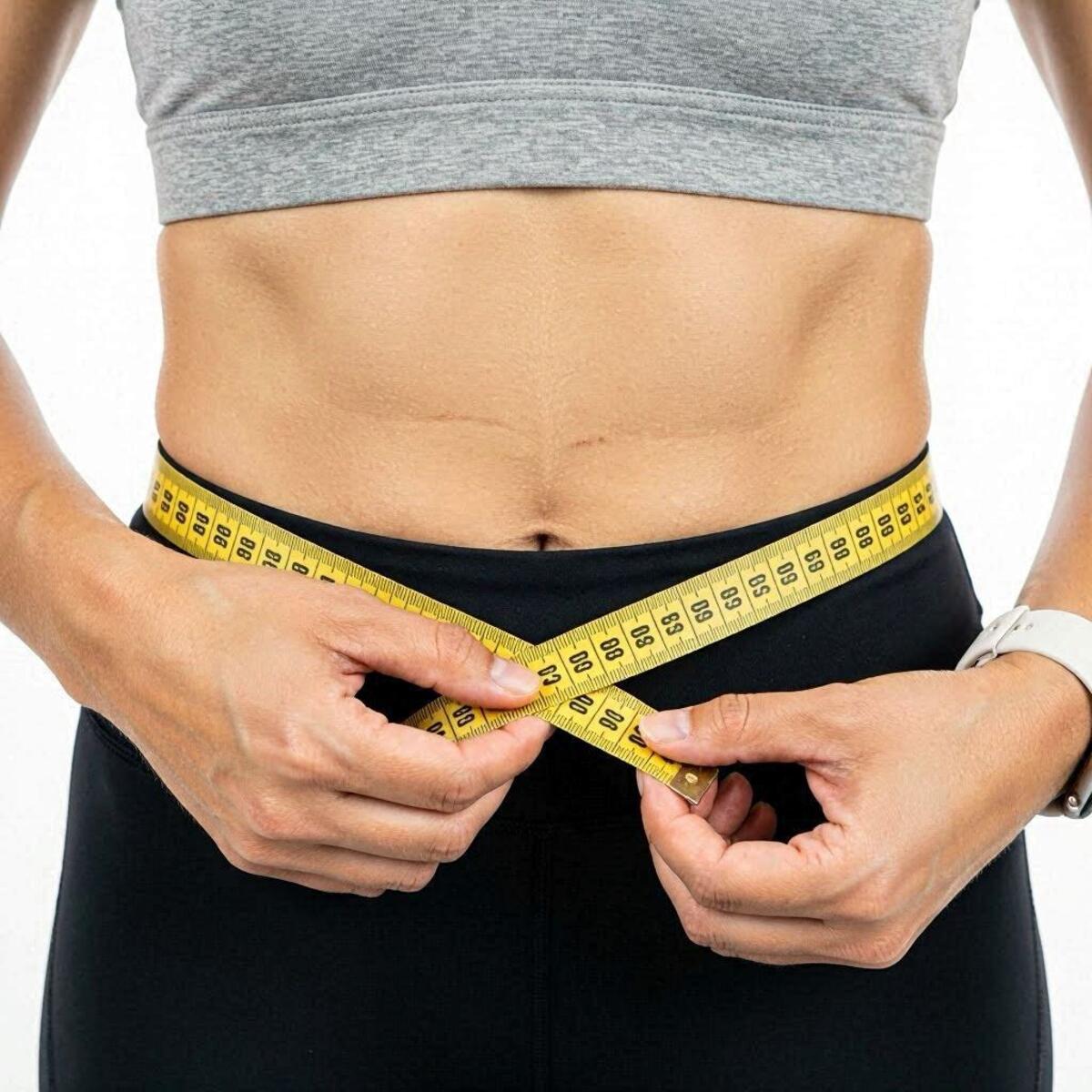
For the neck measurement, measure the circumference of your neck just below the larynx (Adam's apple), keeping the tape perpendicular to the long axis of the neck. For the waist measurement, men measure at the navel. Women measure at the narrowest point of the waist, typically just above the navel. For the hip measurement (women only), measure at the widest point of the hips and buttocks, keeping the tape parallel to the floor. Take each measurement twice and average them. Do not compress the skin with the tape — keep it snug but not tight.
Body Fat Categories for Adults
Body fat percentage categories differ by gender because women naturally carry more essential fat than men. For men, essential fat is 2 to 5%, athletes are typically 6 to 13%, fitness is 14 to 17%, acceptable is 18 to 24%, and above 25% is considered obese. For women, essential fat is 10 to 13%, athletes are 14 to 20%, fitness is 21 to 24%, acceptable is 25 to 31%, and above 32% is considered obese. The US Navy's maximum allowable body fat is 22% for men and 33% for women.
Accuracy of the US Navy Method
The US Navy method has been validated in numerous studies and is considered reasonably accurate for population-level assessment. Compared to DEXA (dual-energy X-ray absorptiometry), the gold standard for body composition measurement, the Navy method typically has an error margin of 3 to 4 percentage points. It tends to slightly underestimate body fat in obese individuals and slightly overestimate in very lean individuals. For most people tracking body composition trends over time, this level of accuracy is sufficient.
How to Use Our Free Body Fat Calculator
Our free body fat calculator at cookiescursor.com uses the US Navy formula to estimate your body fat percentage from simple tape measure readings. Select your gender, choose Imperial or Metric units, enter your height and circumference measurements, and get your result instantly. The tool shows your body fat percentage, your category with color coding, and your estimated fat mass and lean mass. For informational purposes only — consult a healthcare professional for medical advice. No signup required.
Frequently Asked Questions
Is the US Navy method accurate for everyone?
It is reasonably accurate for most adults but less precise at the extremes of body composition. Very lean and very obese individuals may see larger errors compared to DEXA.
How often should I measure body fat?
Monthly measurements give a clearer picture of trends than weekly measurements, which can be affected by hydration and measurement error. Use consistent measurement conditions — same time of day, same measurer.
What is the most accurate body fat measurement method?
DEXA scanning is considered the gold standard. Hydrostatic weighing and air displacement plethysmography (Bod Pod) are also highly accurate. All require specialized equipment and clinical settings.
Can I lose body fat without losing weight?
Yes — body recomposition, where you simultaneously lose fat and gain muscle, is possible, particularly for beginners, people returning to exercise, and those with higher body fat percentages.
What body fat percentage is healthy?
The acceptable range (18 to 24% for men, 25 to 31% for women) is associated with normal metabolic health. The fitness range (14 to 17% for men, 21 to 24% for women) is associated with excellent cardiovascular health.
Does body fat percentage affect metabolism?
Yes. Higher muscle mass increases resting metabolic rate because muscle tissue burns more calories at rest than fat tissue. Reducing body fat while preserving muscle improves metabolic efficiency.
Calculate Your Body Fat Now
Use our free body fat calculator using the US Navy method. For informational purposes only. No signup required.