What Is Compound Interest?
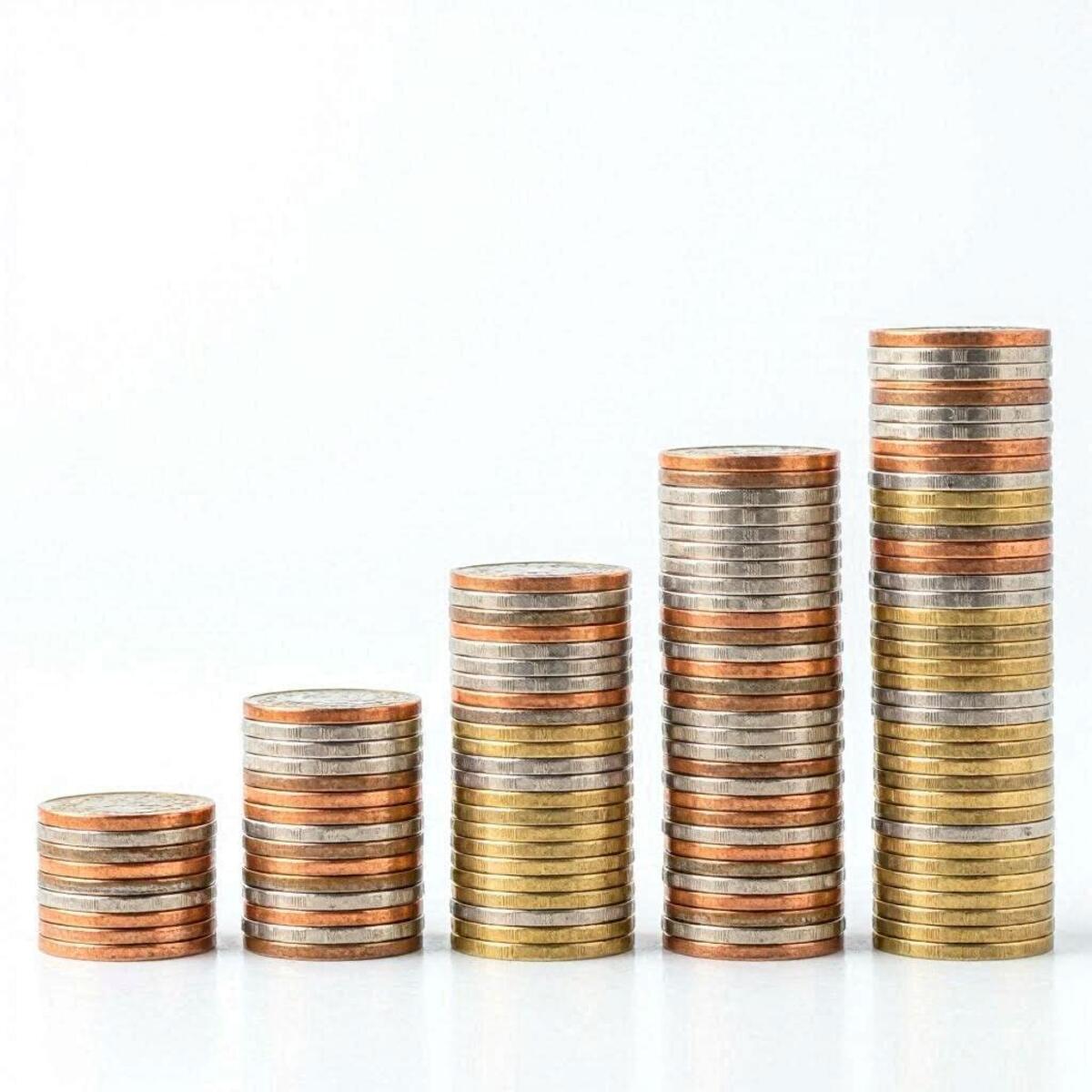
Compound interest is interest calculated on both the initial principal and the accumulated interest from previous periods. Unlike simple interest — which is calculated only on the principal — compound interest causes your money to grow at an accelerating rate over time. Albert Einstein is often credited with calling compound interest the eighth wonder of the world, and while the attribution may be apocryphal, the sentiment is mathematically sound.
The difference between simple and compound interest becomes dramatic over long time periods. $10,000 invested at 8% simple interest for 30 years grows to $34,000. The same $10,000 at 8% compound interest grows to $100,627 — nearly three times as much.
The Compound Interest Formula
The standard compound interest formula is A equals P multiplied by (1 plus r divided by n) raised to the power of n multiplied by t. In this formula, A is the final amount, P is the principal (initial investment), r is the annual interest rate as a decimal, n is the number of times interest compounds per year, and t is the time in years.
For $10,000 invested at 8% annual interest compounded monthly for 10 years: A equals 10,000 multiplied by (1 plus 0.08 divided by 12) raised to the power of 12 multiplied by 10, which equals $22,196. The $12,196 in growth is entirely from compound interest — your money more than doubled without adding a single additional dollar.
How Compounding Frequency Affects Growth
The more frequently interest compounds, the faster your money grows. On $10,000 at 8% for 10 years: annual compounding produces $21,589, quarterly compounding produces $22,080, monthly compounding produces $22,196, and daily compounding produces $22,253. The differences between monthly and daily compounding are relatively small, but the difference between annual and monthly compounding is meaningful over long periods.
The Power of Monthly Contributions
The real wealth-building power of compound interest becomes apparent when you add regular contributions. If you invest $10,000 today and add $200 per month at 8% annual interest compounded monthly for 30 years, your final balance is approximately $367,000. Of that, $82,000 came from your initial investment and contributions, and $285,000 came purely from compound interest. You nearly quadrupled your contributed amount.
This is why financial advisors consistently emphasize starting early. Investing $200 per month from age 25 to 65 at 8% produces approximately $702,000. Starting at 35 instead — just 10 years later — produces only $298,000. The 10-year delay costs you more than $400,000 in final wealth despite the same monthly contribution.
Compound Interest for Savings and Retirement Planning
High-yield savings accounts in the US currently offer 4% to 5% annual interest compounded daily. On $50,000 in savings at 4.5% compounded daily for 5 years, you would earn approximately $12,500 in interest — effectively getting one year's worth of savings for free simply by keeping your money in a high-yield account rather than a standard savings account paying 0.01%.
For retirement accounts like a 401(k) or IRA in the US, the combination of compound growth and tax advantages is extraordinarily powerful. A Roth IRA contribution of $6,500 per year starting at age 25 at an average 8% return grows to approximately $1.9 million by age 65 — completely tax-free upon withdrawal.
How to Use Our Free Compound Interest Calculator
Our free compound interest calculator at cookiescursor.com calculates your future value based on principal, interest rate, compounding frequency, time period, and optional monthly contributions. It shows your future value, total principal invested, total interest earned, growth multiplier, and a year-by-year breakdown of your balance growth. No signup required.
Frequently Asked Questions
What is the Rule of 72?
The Rule of 72 is a quick way to estimate how long it takes to double your money. Divide 72 by your annual interest rate. At 8%, your money doubles every 9 years (72 divided by 8). At 6%, it doubles every 12 years.
Does compound interest work against you with debt?
Yes. Credit card debt typically compounds daily at rates of 20% to 30%. A $5,000 credit card balance at 24% APR compounding daily grows to approximately $6,240 after one year if you make no payments.
What investments offer compound interest?
Savings accounts, CDs, bonds, dividend reinvestment plans (DRIPs), and index funds all benefit from compounding. Stock market index funds historically return 7% to 10% annually on average over long periods.
Is compound interest the same as APY?
APY (Annual Percentage Yield) reflects the actual annual return including compounding. A savings account with 4.5% APR compounded daily has an APY of approximately 4.60%. APY is the more accurate figure for comparing accounts.
Calculate Your Compound Interest Now
Use our free compound interest calculator to see how your savings grow over time. Add monthly contributions for a complete retirement projection. No signup required.