How Much Caffeine Is Safe?
The US Food and Drug Administration (FDA) considers 400 milligrams of caffeine per day — roughly the amount in four standard cups of coffee — as generally safe for healthy adults. Health Canada, the European Food Safety Authority, and most national health agencies cite similar guidelines. However, individual sensitivity to caffeine varies significantly. Pregnant women are advised to limit caffeine to 200mg per day. People with anxiety disorders, heart conditions, or certain medications may need to limit caffeine further. Children and adolescents should consume significantly less.
Caffeine Content by Drink
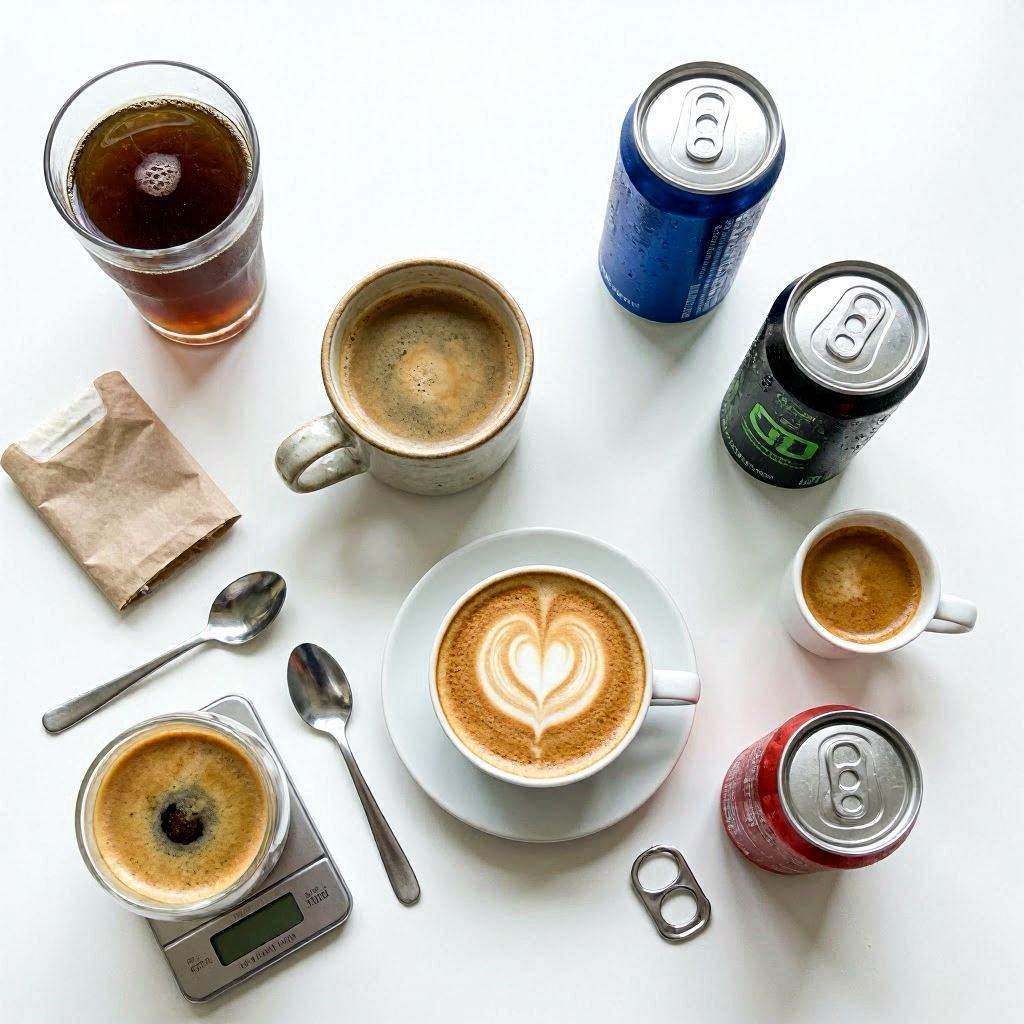
Caffeine content varies significantly across different beverages. A standard 8oz cup of drip coffee contains approximately 70-140mg of caffeine, with an average around 95mg. A double espresso (2oz) contains approximately 120-130mg. Black tea (8oz) contains approximately 40-70mg. Green tea contains 25-50mg per cup. A standard 12oz can of cola contains approximately 34-46mg. Energy drinks vary enormously — Red Bull (8.4oz) has 80mg, while Bang Energy (16oz) has 300mg. These figures are averages — actual caffeine content varies by brand, brewing method, and serving size.
How Caffeine Works in the Body
Caffeine is absorbed rapidly from the gastrointestinal tract and reaches peak blood concentration approximately 30-60 minutes after consumption. It works by blocking adenosine receptors in the brain — adenosine is a neurotransmitter that promotes sleepiness, so blocking it produces alertness. The half-life of caffeine is approximately 5-6 hours in healthy adults — meaning half the caffeine from a 3 PM coffee is still in your system at 8-9 PM. Caffeine metabolism varies significantly: smokers metabolize caffeine approximately twice as fast, while pregnant women metabolize it much more slowly.
Signs of Caffeine Overdose
Consuming more than 400mg of caffeine can cause insomnia, nervousness, restlessness, nausea, increased heart rate, and headache in many people. Very high doses (above 1,000mg) can cause arrhythmias, seizures, and in extreme cases, death. Energy drink-related emergency department visits have increased as highly caffeinated products have become more widely available. Always check total caffeine content across all beverages consumed in a day.
How to Use Our Free Caffeine Calculator
Our free caffeine calculator at cookiescursor.com tracks total daily caffeine intake from multiple drinks. Add your beverages throughout the day, enter your body weight for a personalized intake assessment, and see your total caffeine against safe limits with color-coded feedback. A half-life chart shows estimated caffeine remaining in your system at 3, 6, 9, and 12 hours after consumption. For informational purposes only. No signup required.
Frequently Asked Questions
Does caffeine cause dehydration?
At moderate doses, caffeinated beverages do not cause net dehydration — the fluid content outweighs the mild diuretic effect. At very high doses, caffeine may have a more significant diuretic effect.
Can I build a tolerance to caffeine?
Yes. Regular caffeine consumption leads to tolerance — the same dose produces less effect over time. Reducing or eliminating caffeine for 1-2 weeks largely resets tolerance.
What is caffeine withdrawal?
Stopping regular caffeine use after dependence develops causes withdrawal symptoms including headache, fatigue, irritability, and difficulty concentrating. Symptoms typically begin 12-24 hours after the last dose and resolve within 2-9 days.
Is caffeine safe during pregnancy?
Health agencies recommend limiting caffeine to 200mg per day during pregnancy. Higher intake has been associated with increased risk of miscarriage and low birth weight. Consult your healthcare provider for personalized guidance.
Does caffeine affect sleep quality even if you fall asleep?
Yes. Caffeine reduces slow-wave sleep (deep, restorative sleep) even when it does not prevent sleep onset. Consuming caffeine after noon can affect sleep quality even in people who fall asleep easily.
How does caffeine affect anxiety?
Caffeine stimulates the central nervous system and can worsen anxiety symptoms, trigger panic attacks in susceptible individuals, and interact with anxiety medications. People with anxiety disorders often benefit from reducing or eliminating caffeine.
Track Your Caffeine Now
Use our free caffeine calculator to monitor daily intake. For informational purposes only. No signup required.