How Paint Coverage Works
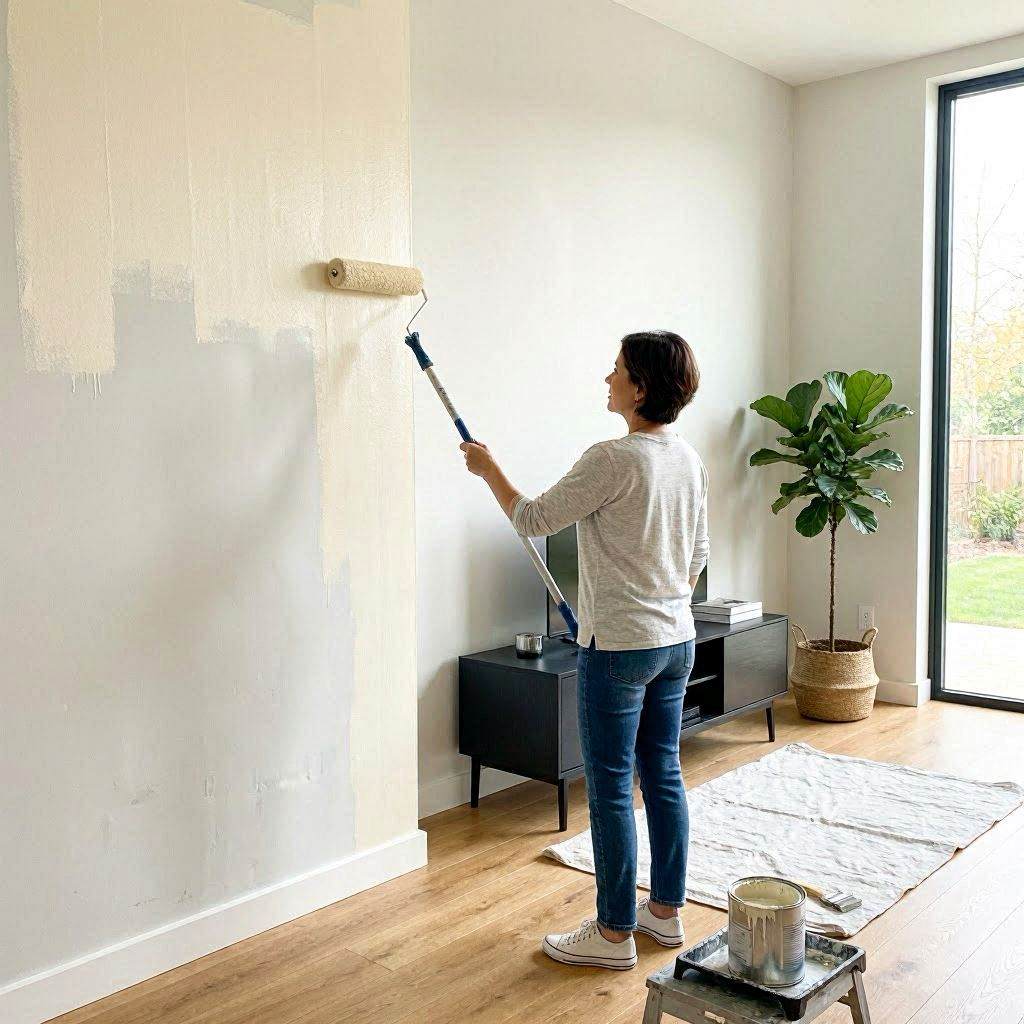
Standard interior latex paint covers approximately 350 to 400 square feet per gallon on smooth, properly primed surfaces. This figure varies based on surface texture (rough surfaces absorb more paint), paint quality (premium paints have higher pigment density and better coverage), and application method (roller application is more efficient than brush). Most paint manufacturers print coverage estimates on the can — use the lower end of the range for planning to avoid running short.
Calculating Wall Area
To calculate the paintable wall area for a room, multiply the perimeter by the ceiling height. For a 12 by 15 foot room with 8-foot ceilings: perimeter = (12 + 15 + 12 + 15) = 54 feet. Wall area = 54 × 8 = 432 square feet. Subtract the area of doors (approximately 21 square feet each) and windows (approximately 15 square feet each). For two standard doors and one window: 432 - (2 × 21) - 15 = 375 square feet of paintable wall surface.
One Coat vs Two Coats
One coat of paint is rarely sufficient for full coverage, particularly when painting over a different color or applying a saturated color. Two coats are standard for most interior projects and produce a more even, durable finish. Dark colors over light backgrounds may require three coats. New drywall requires a primer coat plus two topcoats. When switching from a dark color to a light one, a tinted primer dramatically reduces the number of topcoats needed.
Ceiling Paint
Ceilings are often overlooked in paint calculations but require their own estimate. Ceiling area equals the floor area of the room — for a 12 by 15 foot room, the ceiling is 180 square feet. Ceiling paint is typically flat (matte) finish to hide imperfections and reduce glare. One coat of ceiling paint is sometimes sufficient if the existing ceiling is clean and undamaged. Two coats produce a more consistent finish.
How to Use Our Free Paint Calculator
Our free paint calculator at cookiescursor.com calculates the gallons needed for walls and ceiling separately. Enter room dimensions, ceiling height, number of doors and windows, number of coats, and paint coverage rate. Results show net paintable area, gallons needed rounded to practical quantities (quarts and gallons), and optional cost estimate. Supports Imperial and Metric. No signup required.
Frequently Asked Questions
Should I buy a little extra paint?
Yes — buy 10% more than calculated and keep leftover paint in a sealed can for touch-ups. Color matching years later is difficult as paint formulas change.
What finish should I use for walls?
Eggshell or satin finish is most common for walls — it is washable and has a slight sheen. Flat finish hides imperfections but is harder to clean. Semi-gloss is used for trim and high-moisture areas like bathrooms.
Do I need to prime before painting?
New drywall, bare wood, and significant color changes require primer. Repainting the same color over a sound surface typically does not require priming.
How long does paint take to dry?
Latex paint is dry to touch in 1-2 hours and ready for a second coat in 4 hours. Full cure takes 2-4 weeks — avoid washing walls until fully cured.
How much does it cost to paint a room?
DIY paint cost is typically $50-150 for a standard bedroom. Professional painting costs $200-500 per room for labor plus materials.
What is the difference between paint and primer?
Primer is a preparatory coating that seals the surface and improves paint adhesion. Paint provides color and the final finish. Paint-and-primer-in-one products combine both but are less effective than separate application.
Calculate Your Paint Now
Use our free paint calculator for exact gallon quantities. No signup required.