Why Accurate Square Footage Matters
Whether you are ordering flooring, calculating how much paint to buy, sizing an area rug, or estimating contractor costs, accurate square footage is the foundation of every home improvement project. Underestimating leads to running short of materials mid-project — requiring additional orders that may not match dye lots in the case of flooring or paint. Overestimating wastes money on materials you do not need. A few minutes with a tape measure and a calculator can save significant time, money, and frustration.
Calculating Rectangular Room Square Footage
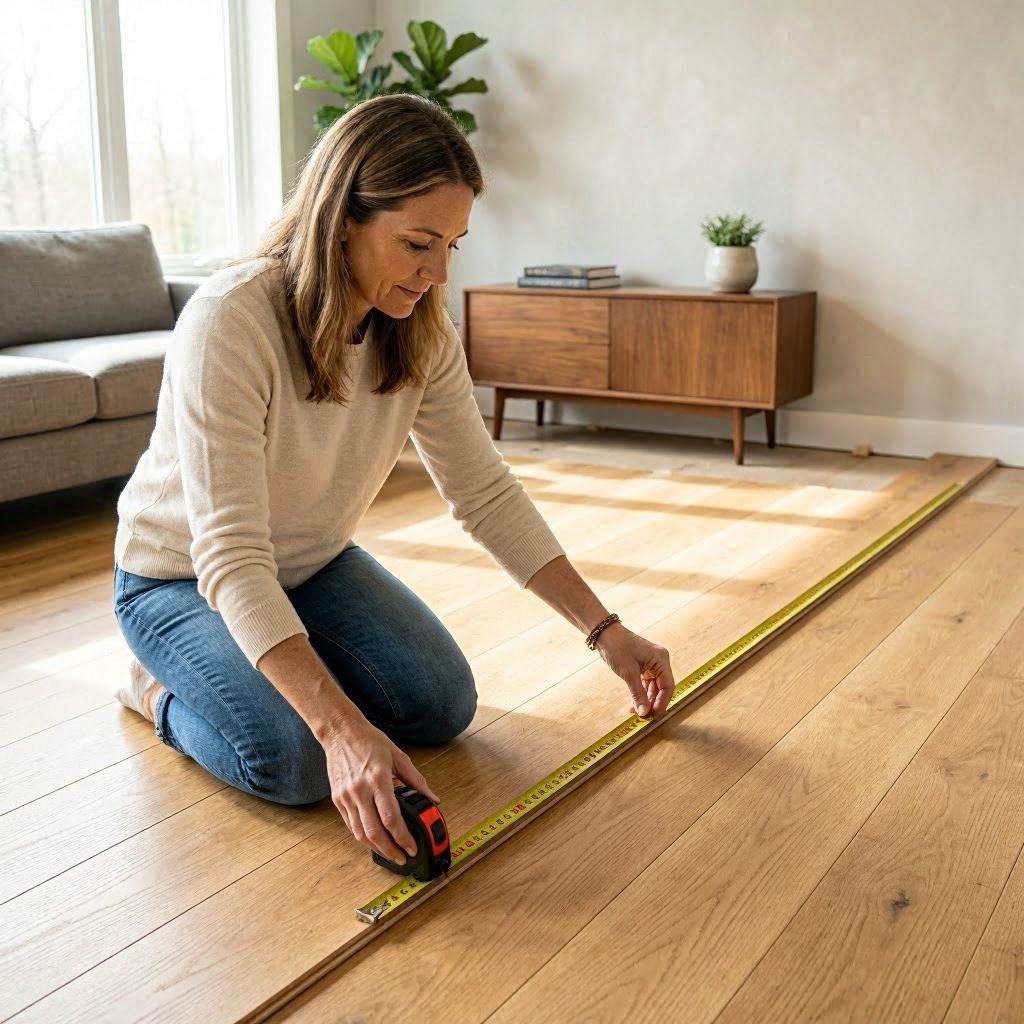
For rectangular rooms, the calculation is simple: Length × Width = Square Footage. Measure the length and width of the room at their longest points. A room that is 15 feet long and 12 feet wide has 180 square feet. Always measure in the same unit — mixing feet and inches leads to errors. Convert inches to decimal feet (6 inches = 0.5 feet) before multiplying. For a room that measures 15 feet 6 inches by 12 feet 3 inches: 15.5 × 12.25 = 189.875 square feet.
Calculating Non-Rectangular Spaces
L-shaped rooms can be divided into two rectangles, with the areas calculated separately and then added. Triangular spaces use the formula: (Base × Height) / 2. Circular spaces use: π × radius². For an odd-shaped room, break it into combinations of rectangles and triangles, calculate each section, and sum the results. Our calculator handles rectangle, triangle, circle, L-shape, and T-shape calculations automatically.
Adding Waste Factor for Flooring
When ordering flooring materials, always add a waste factor to the calculated square footage. For straight-lay hardwood or laminate flooring, add 10% extra. For diagonal or herringbone installation patterns, add 15%. For tile flooring, add 10% for square rooms and 15% for complex shapes or diagonal cuts. For carpet, which is installed in large rolls requiring seaming, consult with the installer about the appropriate overage factor based on your specific room dimensions and the carpet width. Waste factor accounts for cuts, pattern matching, and material damaged during installation.
Paint Coverage Estimation
Standard interior paint covers approximately 350 to 400 square feet per gallon. For walls, calculate the perimeter of the room multiplied by the ceiling height, then subtract the area of doors and windows. For ceilings, the square footage is the same as the floor area. Two coats are typically required for full coverage — double the calculated paint quantity. For rough or highly porous surfaces, coverage may be reduced by 20 to 30%. When in doubt, round up — leftover paint is useful for touch-ups.
How to Use Our Free Square Footage Calculator
Our free square footage calculator at cookiescursor.com calculates the area of individual rooms in multiple shapes and totals them. Supports Imperial (feet and inches) and Metric (meters and centimeters) measurements. Results show square feet, square meters, square yards, and square centimeters. Add as many rooms or areas as needed. No signup required.
Frequently Asked Questions
How do I measure an irregular room?
Divide the room into regular shapes (rectangles, triangles), measure each section separately, calculate each area, and sum them. Sketch the room on paper first to ensure you cover all sections.
Should I include closets in flooring square footage?
Yes, if you are installing flooring throughout including closets. Exclude them only if they will have different flooring or are not being included in the project.
How many square feet is a standard room?
A standard US bedroom is approximately 130 to 150 square feet. A living room is typically 200 to 400 square feet. A standard US home averages approximately 2,300 square feet total.
What is the difference between square feet and linear feet?
Square feet measure area (two-dimensional). Linear feet measure length (one-dimensional). Baseboards, crown molding, and fencing are measured in linear feet, while flooring and paint are measured in square feet.
How do I convert square feet to square yards?
Divide square feet by 9 (since 1 yard = 3 feet, and 1 square yard = 9 square feet). 300 square feet = 33.33 square yards.
How accurate does my measurement need to be?
For material ordering, measure to the nearest inch and convert to decimal feet. Rough measurements to the nearest foot work for initial estimates but may lead to material shortages or over-ordering.
Calculate Square Footage Now
Use our free square footage calculator for multiple rooms and shapes. No signup required.