What Is Ovulation?
Ovulation is the process by which a mature egg is released from the ovary into the fallopian tube, where it can be fertilized by sperm. Ovulation typically occurs once per menstrual cycle. The released egg survives for approximately 12 to 24 hours after ovulation — this is the narrow window during which fertilization must occur for conception to take place. Understanding when ovulation occurs is therefore the most critical piece of information for couples trying to conceive.
When Does Ovulation Occur?
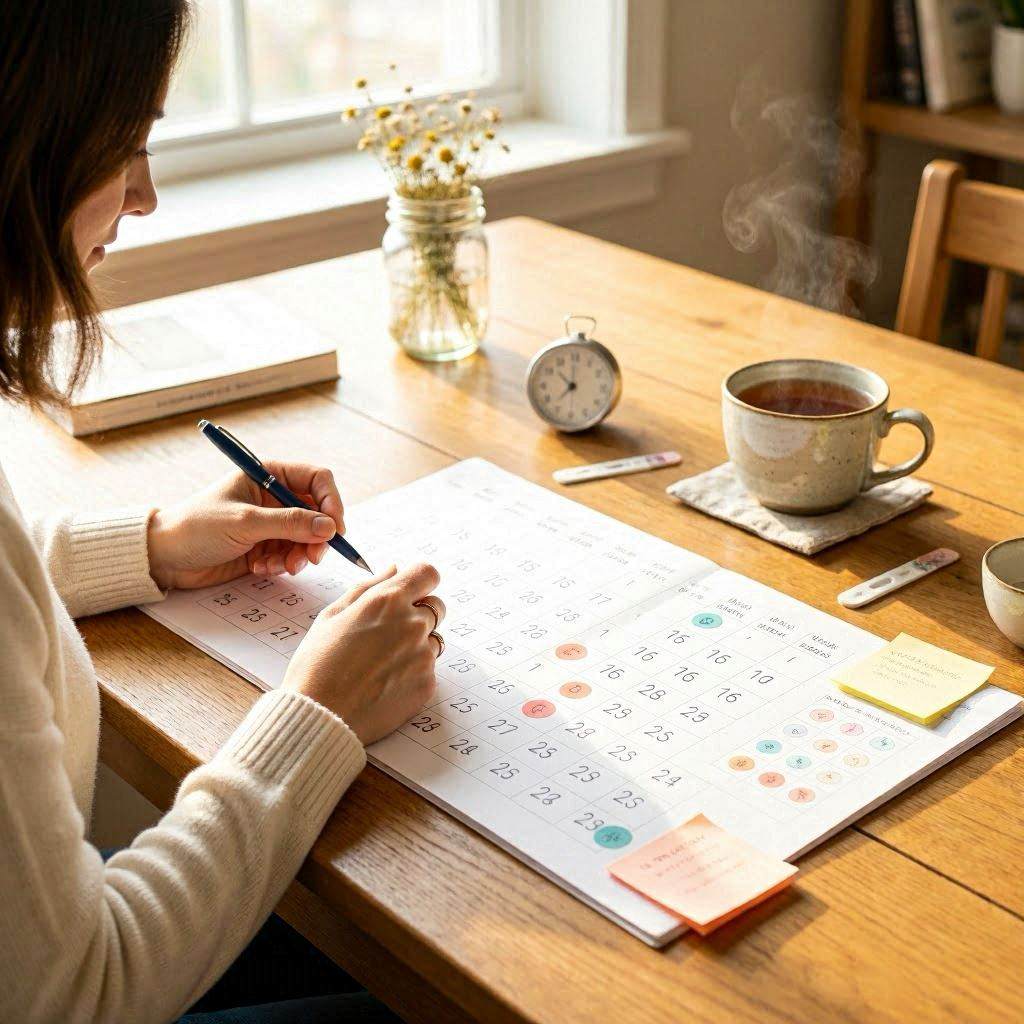
In a standard 28-day cycle, ovulation typically occurs on day 14 — approximately 14 days before the next expected period. However, cycle lengths vary significantly between individuals. The key insight is that ovulation typically occurs 14 days before the next period, regardless of cycle length. For a 32-day cycle, ovulation typically occurs around day 18. For a 24-day cycle, it occurs around day 10. This 14-day luteal phase (the time between ovulation and the next period) is remarkably consistent — it is the follicular phase (the first half of the cycle) that varies in length between individuals.
The Fertile Window Explained
The fertile window extends beyond the single day of ovulation because sperm can survive in the female reproductive tract for up to 5 days. Having intercourse in the 5 days before ovulation, on the day of ovulation, and the day after gives the highest probability of conception. The fertile window is therefore typically 6 days long — the 5 days before ovulation plus ovulation day itself. Having intercourse every 1 to 2 days during this window maximizes conception chances without requiring precise timing of the exact ovulation day.
Signs of Ovulation
Several physical signs can help confirm when ovulation is occurring. Changes in cervical mucus are one of the most reliable indicators — mucus becomes clear, slippery, and stretchy (often described as resembling raw egg whites) in the days around ovulation. Basal body temperature (BBT) rises slightly (0.2 to 0.5°C or 0.4 to 1°F) after ovulation due to progesterone release, and tracking this temperature daily can confirm ovulation in retrospect. Some women experience mittelschmerz — a brief one-sided pelvic pain or twinge — around ovulation. Ovulation predictor kits (OPKs) detect the surge in luteinizing hormone (LH) that occurs 24 to 36 hours before ovulation, providing advance warning.
Irregular Cycles and Ovulation Tracking
Irregular cycles make ovulation prediction more challenging. Conditions such as polycystic ovary syndrome (PCOS), thyroid disorders, and significant weight changes can disrupt ovulation patterns. For women with irregular cycles, tracking multiple signs of ovulation — cervical mucus, BBT, and OPKs — provides more reliable information than calendar calculation alone. Consulting a healthcare provider is recommended if cycles are consistently irregular or if conception has not occurred after 12 months of trying (6 months for women over 35).
How to Use Our Free Ovulation Calculator
Our free ovulation calculator at cookiescursor.com calculates your next ovulation date and fertile window based on the first day of your last period and your average cycle length. Results show the fertile window dates, ovulation day, and next expected period date. For informational purposes only — consult a healthcare provider for fertility advice. No signup required.
Frequently Asked Questions
Can I get pregnant outside the fertile window?
Pregnancy outside the calculated fertile window is possible but unlikely. Cycle irregularities can shift ovulation timing unpredictably, which is why backup contraception is important if pregnancy is not desired.
How long does the egg survive after ovulation?
The egg survives for only 12 to 24 hours after ovulation. This is why the days before ovulation — when sperm are already present — are as important as ovulation day itself.
Does stress affect ovulation?
Yes. Significant physical or emotional stress can delay or suppress ovulation by interfering with the hormonal signals that trigger egg release.
Can I ovulate twice in one cycle?
Multiple ovulations can occur within a 24-hour period (which is how fraternal twins are conceived) but not at two separate points in the cycle.
How many cycles does it typically take to conceive?
For healthy couples under 35, approximately 85% conceive within 12 months of trying. About 30% conceive in the first cycle.
Does age affect ovulation?
Yes. Ovarian reserve and egg quality decline with age, particularly after 35. This reduces both the frequency of ovulation and the probability of conception per cycle.
Calculate Your Fertile Window Now
Use our free ovulation calculator to find your ovulation date and fertile window. For informational purposes only. No signup required.